
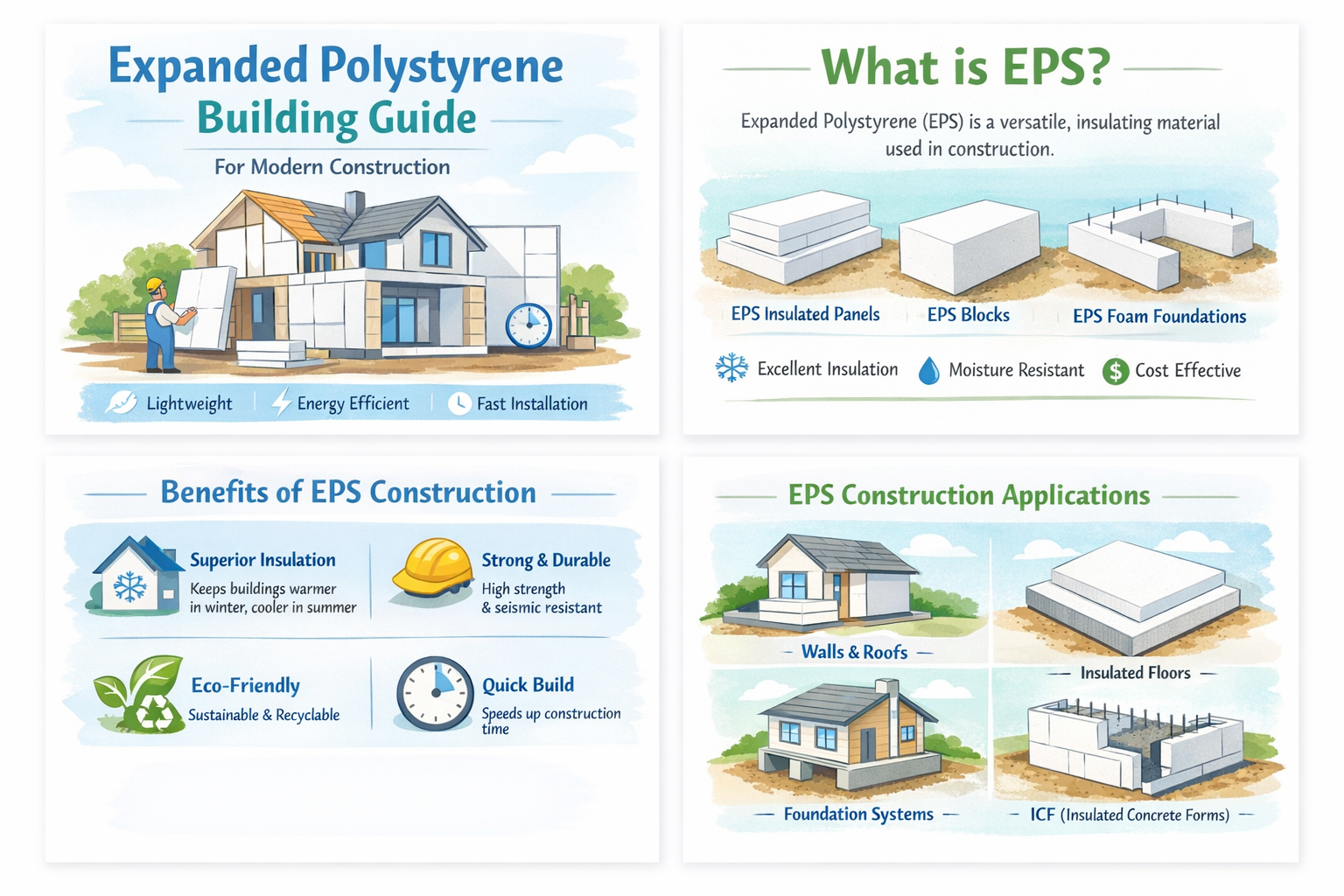
Expanded polystyrene building systems are transforming modern construction by offering lightweight, energy-efficient, and cost-effective solutions for residential, commercial, and industrial structures. Expanded polystyrene (EPS) is a rigid foam insulation material made from polystyrene beads that expand and fuse together to form strong yet lightweight boards or structural panels.
In recent decades, the construction industry has increasingly adopted EPS materials because of their ability to improve building energy performance while reducing structural weight and construction costs. According to data from the International Energy Agency (IEA), buildings account for nearly 30% of global energy consumption, making insulation materials like EPS critical for improving energy efficiency.
An expanded polystyrene building typically uses EPS boards, insulated panels, or structural insulated panels (SIPs) as part of its wall, roof, and floor systems. These materials offer excellent thermal insulation, moisture resistance, and durability while remaining easy to transport and install.
This article explores the role of EPS in construction, including how expanded polystyrene building systems work, the advantages of using EPS materials, common applications, installation methods, and future trends shaping the insulation industry.
What Is Expanded Polystyrene?
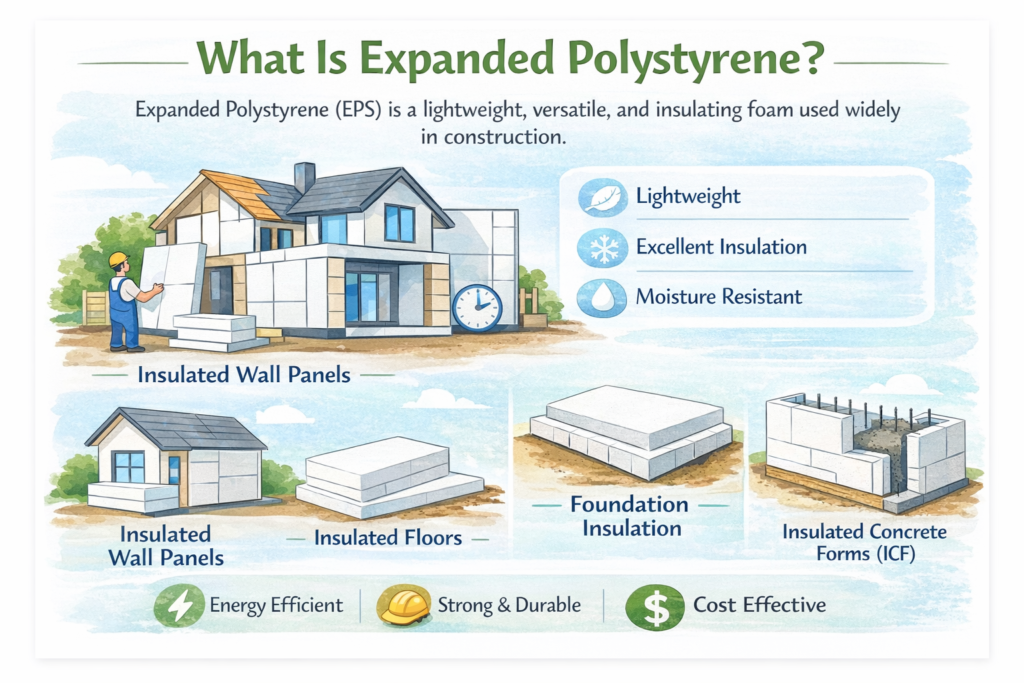
Expanded polystyrene (EPS) is a lightweight thermoplastic foam material produced by expanding small polystyrene beads with steam. The beads expand up to 40 times their original size, forming a rigid foam structure filled mostly with air.
EPS foam typically contains about 98% air and 2% polystyrene, which gives it excellent insulation properties while keeping the material extremely lightweight.
Key Properties of EPS
Expanded polystyrene materials used in construction provide several important performance benefits:
-
Excellent thermal insulation
-
Lightweight structure
-
Moisture resistance
-
High compressive strength
-
Long lifespan
-
Easy handling and installation
Because of these characteristics, EPS has become one of the most widely used insulation materials in modern construction systems.
How Expanded Polystyrene Building Systems Work
An expanded polystyrene building typically integrates EPS insulation boards or panels into various parts of the building structure.
EPS Insulated Panels
Many modern buildings use Structural Insulated Panels (SIPs) that contain EPS foam cores sandwiched between structural boards such as oriented strand board (OSB).
These panels provide:
-
Structural support
-
Thermal insulation
-
Air sealing
SIPs allow builders to create walls, roofs, and floors quickly while improving energy efficiency.
EPS Wall Insulation Systems
EPS boards are commonly installed as part of External Thermal Insulation Composite Systems (ETICS). These systems involve attaching insulation boards to exterior walls and covering them with protective layers and finishing coatings.
Lightweight Structural Blocks
EPS can also be used to produce lightweight building blocks or modular construction components that reduce the overall weight of a building structure.
Advantages of Expanded Polystyrene in Construction
The use of EPS in building systems offers several technical and economic benefits.
Superior Thermal Insulation
EPS has excellent thermal resistance, typically ranging from 0.032 to 0.038 W/mK, depending on density and manufacturing methods. This allows buildings to maintain stable indoor temperatures while reducing heating and cooling energy consumption.
Lightweight Construction
EPS is significantly lighter than traditional building materials such as concrete or brick. This reduces structural load and simplifies transportation and installation.
Cost Efficiency
EPS insulation systems often cost less than many alternative insulation materials while still delivering strong performance.
Moisture Resistance
The closed-cell structure of expanded polystyrene limits water absorption, helping maintain insulation performance even in humid environments.
Durability
EPS insulation boards can maintain their thermal properties for 30 to 50 years or more when installed properly.
Common Applications of Expanded Polystyrene Building Systems
Expanded polystyrene materials are used across many types of construction projects.
Residential Construction
EPS boards are widely used in residential homes for wall insulation, roofing insulation, and floor insulation systems.
Commercial Buildings
Offices, retail centers, and commercial facilities often use EPS insulation panels to meet energy efficiency standards.
Cold Storage Facilities
Cold storage warehouses rely on high-performance insulation materials like EPS to maintain low temperatures and protect stored products.
Infrastructure and Civil Engineering
EPS geofoam blocks are used in road construction and bridge projects to reduce soil pressure and stabilize embankments.
Modular Construction
EPS-based insulated panels are commonly used in prefabricated and modular construction systems.
Expanded Polystyrene vs Other Building Materials
When compared to traditional insulation materials, EPS offers a strong balance of performance, cost, and ease of installation.
| Material | Thermal Insulation | Weight | Cost | Moisture Resistance |
|---|---|---|---|---|
| EPS | High | Very light | Low | Moderate |
| Mineral Wool | High | Medium | Medium | Good |
| Fiberglass | Moderate | Light | Low | Low |
| Polyurethane Foam | Very high | Light | High | High |
EPS remains one of the most widely used materials due to its affordability and versatility.
Environmental Impact of Expanded Polystyrene Buildings
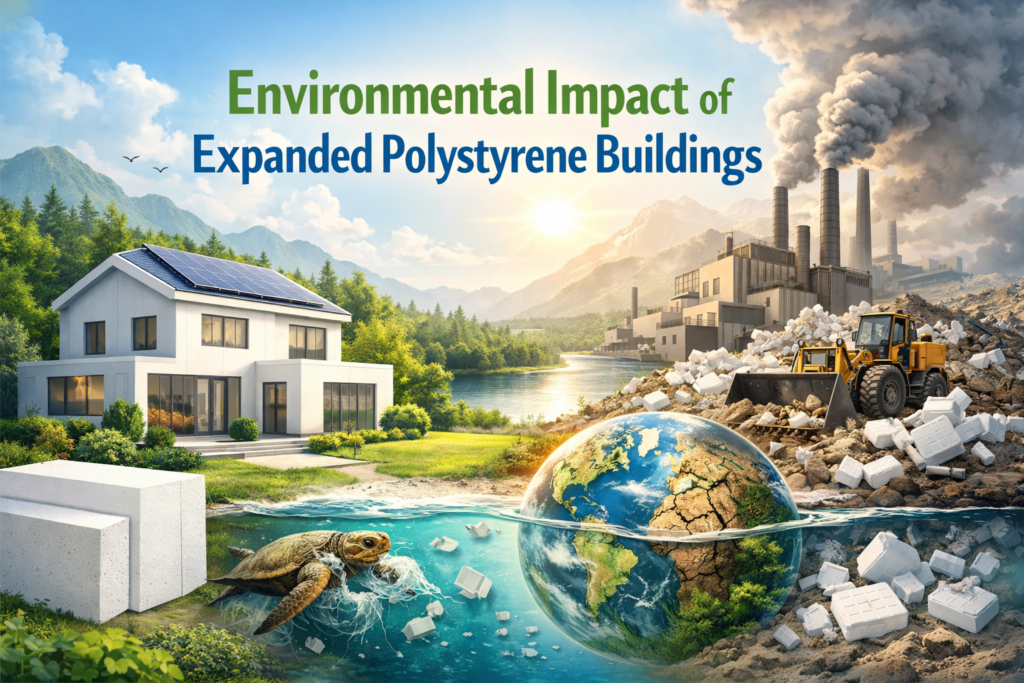
Environmental sustainability is an important consideration in modern construction.
Energy Efficiency Benefits
EPS insulation significantly reduces heating and cooling energy requirements. Energy-efficient buildings can reduce carbon emissions while lowering operational costs.
Recyclability
Expanded polystyrene can be recycled and reprocessed into new products, including insulation boards and plastic materials.
Reduced Construction Waste
EPS panels are precisely manufactured, which reduces waste during construction.
Improved Building Lifespan
Insulated buildings experience less thermal stress, which helps extend the lifespan of structural components.
How to Design an Expanded Polystyrene Building
When designing a building that uses EPS materials, engineers and architects must consider several technical factors.
Insulation Thickness
The thickness of EPS boards determines the overall thermal performance of the building envelope.
Structural Integration
EPS panels must be integrated properly with load-bearing structures.
Moisture Control
Proper vapor barriers and waterproofing layers are required to prevent moisture buildup.
Fire Safety
Some EPS insulation products are manufactured with flame-retardant additives to meet building safety regulations.
Market Trends in EPS Construction
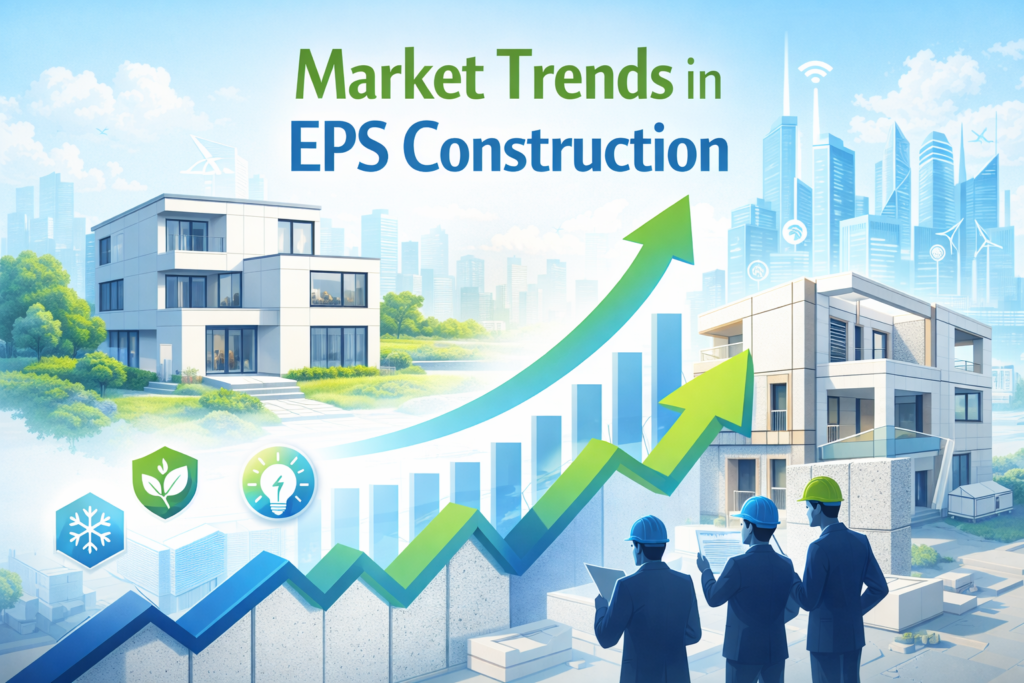
The use of expanded polystyrene materials in construction is increasing worldwide.
According to Grand View Research, the global expanded polystyrene market is expected to grow at a compound annual growth rate (CAGR) of approximately 6% over the next decade.
Key factors driving this growth include:
-
Increased demand for energy-efficient buildings
-
Rapid urbanization and infrastructure development
-
Expansion of cold chain logistics
-
Growth of modular construction systems
These trends suggest that EPS-based building systems will continue to play a significant role in the future of construction.
Recommended Post: Polystyrene Glue: The Complete Guide to Choosing the Best Adhesive
Frequently Asked Questions (FAQ)
What is an expanded polystyrene building?
An expanded polystyrene building uses EPS insulation boards or panels as part of its wall, roof, or floor systems to improve thermal efficiency and structural performance.
Is expanded polystyrene strong enough for construction?
Yes. While EPS itself is lightweight, it is often used in structural insulated panels or combined with other materials to provide strong and durable construction systems.
Is EPS insulation waterproof?
EPS is not completely waterproof but it is highly resistant to moisture and does not absorb significant amounts of water.
How long does EPS insulation last?
EPS insulation can last 30 to 50 years or more when installed properly in building systems.
Are expanded polystyrene buildings energy efficient?
Yes. EPS insulation significantly reduces heat transfer, improving building energy efficiency and lowering heating and cooling costs.
Is expanded polystyrene environmentally friendly?
EPS can be recycled and helps reduce energy consumption in buildings, which contributes to environmental sustainability.
Conclusion
Expanded polystyrene building systems have become an essential component of modern construction due to their exceptional insulation performance, lightweight structure, and cost efficiency. By integrating EPS boards and panels into walls, roofs, and floors, builders can create energy-efficient buildings that reduce operational costs and environmental impact.
The growing demand for sustainable construction and stricter building energy regulations are driving increased adoption of EPS insulation systems worldwide. As technology continues to improve manufacturing methods and recycling processes, expanded polystyrene materials will remain a key solution for future building designs.
If you are planning a construction project or exploring advanced insulation technologies, learning more about polystyrene boards and EPS insulation systems can help you build smarter, more efficient structures.