
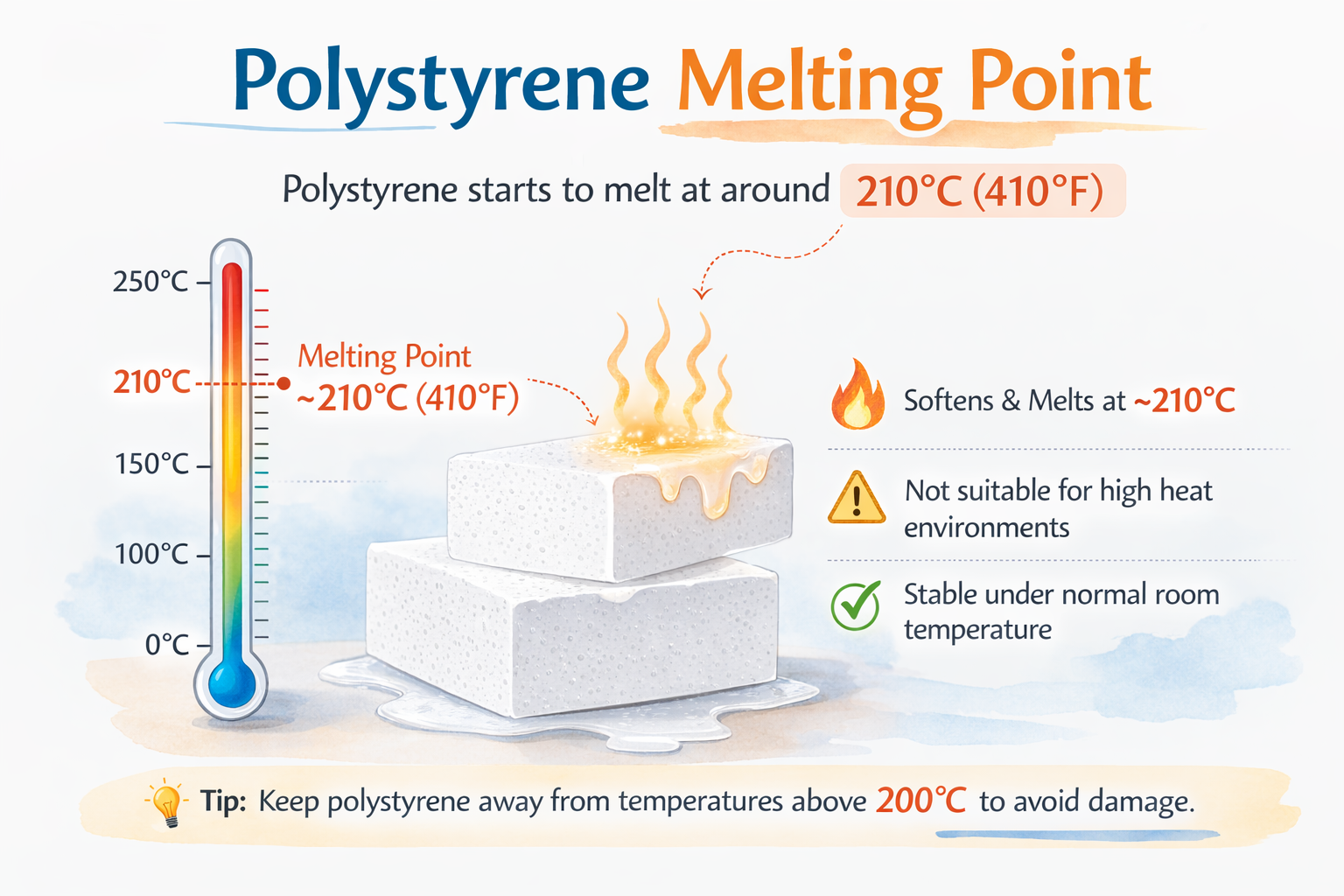
The polystyrene melting point is a critical property that determines how this widely used plastic behaves under heat. In construction, packaging, and insulation industries, understanding the polystyrene melting point helps engineers and builders determine safe temperature ranges, structural stability, and long-term performance of polystyrene products such as EPS (Expanded Polystyrene) and XPS (Extruded Polystyrene) boards.
Polystyrene materials play a major role in modern building insulation systems, lightweight construction panels, and packaging solutions. However, their thermal characteristics require careful consideration because polystyrene is a thermoplastic polymer, meaning it softens when exposed to heat and can eventually melt.
In this article, we will examine the melting behavior of polystyrene, its thermal limits, and how these characteristics influence real-world applications in construction and manufacturing.
The Polystyrene Melting Point
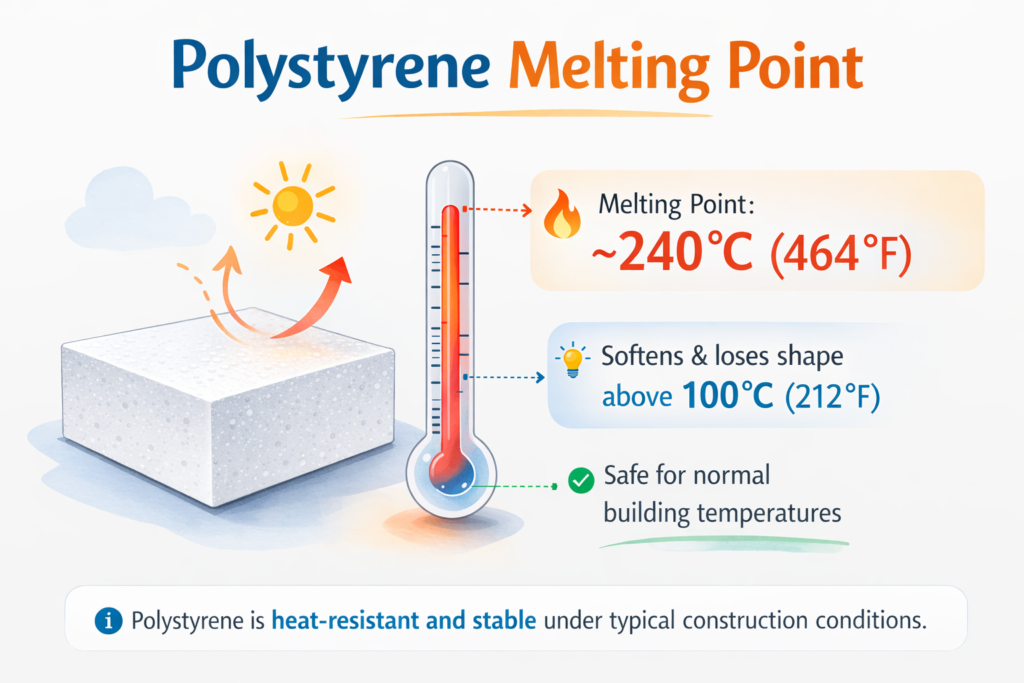
Unlike crystalline materials that have a clear and precise melting temperature, polystyrene behaves differently because it is an amorphous thermoplastic polymer.
Typical Temperature Values
The polystyrene melting point generally occurs within the following temperature ranges:
-
Glass transition temperature (Tg): ~90°C to 105°C
-
Softening temperature: ~100°C to 120°C
-
Thermal deformation begins: ~95°C
-
Complete melting range: ~180°C to 240°C
The most important thermal benchmark is the glass transition temperature (Tg). At this temperature, polystyrene transitions from a rigid structure to a softer and more flexible state.
Why Polystyrene Doesn’t Have a Sharp Melting Point
Polystyrene lacks a precise melting temperature because it does not form a crystalline structure. Instead, it gradually softens and deforms as heat increases.
This behavior makes it suitable for molding, extrusion, and thermoforming processes widely used in manufacturing.
Thermal Properties of Polystyrene
Understanding the thermal properties of polystyrene helps engineers evaluate how it performs in insulation systems and building materials.
Key Thermal Characteristics
| Property | Typical Value |
|---|---|
| Glass transition temperature | 90–105°C |
| Heat distortion temperature | 70–100°C |
| Thermal conductivity | 0.030–0.040 W/mK |
| Decomposition temperature | 300°C+ |
These properties explain why polystyrene insulation boards work effectively in buildings but must remain protected from excessive heat exposure.
Insulation Performance
Polystyrene materials offer excellent thermal resistance (R-value) due to their cellular foam structure. Air trapped inside the foam cells reduces heat transfer, improving energy efficiency in buildings.
Types of Polystyrene and Their Heat Resistance
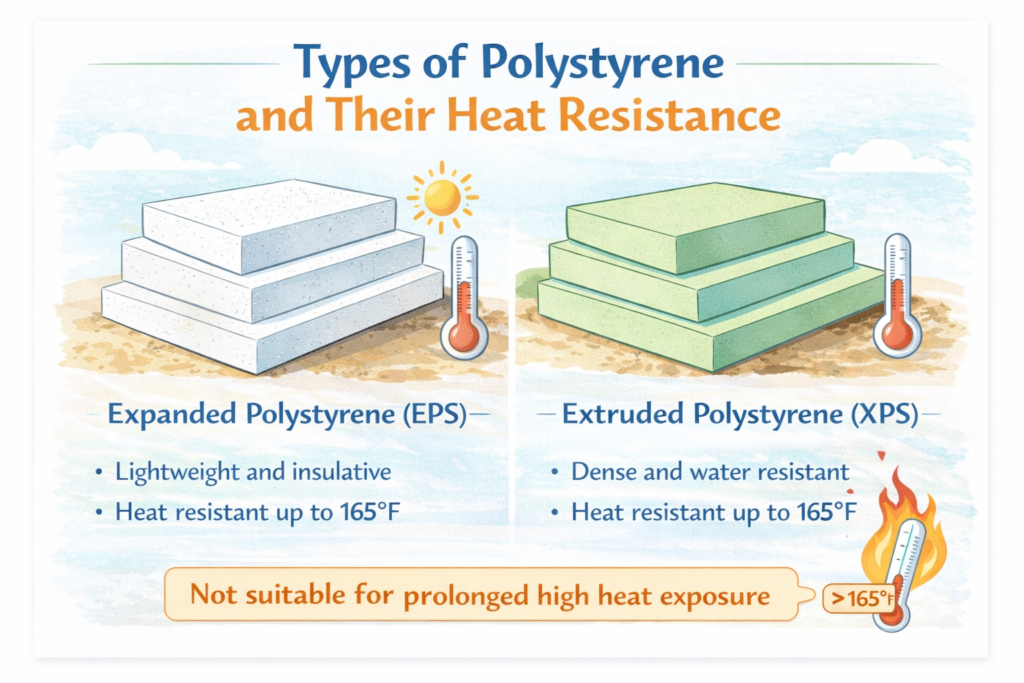
There are several forms of polystyrene used in construction and manufacturing. Each type has slightly different thermal characteristics.
Expanded Polystyrene (EPS)
Expanded Polystyrene (EPS) is a lightweight foam made by expanding polystyrene beads using steam.
EPS Thermal Characteristics
-
Softening temperature: ~90°C
-
Maximum service temperature: ~75°C
-
Melting range: ~200°C
EPS boards are widely used for:
-
Wall insulation
-
Roof insulation
-
Insulated concrete forms (ICF)
-
Structural insulated panels (SIPs)
Their lightweight structure and excellent insulation properties make EPS one of the most widely used building insulation materials globally.
Extruded Polystyrene (XPS)
Extruded Polystyrene (XPS) has a more uniform structure because manufacturers produce it using an extrusion process.
XPS Thermal Characteristics
-
Softening temperature: ~100°C
-
Service temperature: up to 80°C
-
Melting range: ~210°C
XPS offers higher moisture resistance and compressive strength than EPS, making it ideal for:
-
Foundation insulation
-
Below-grade insulation
-
Roof insulation systems
High Impact Polystyrene (HIPS)
High Impact Polystyrene includes rubber additives that improve durability.
HIPS Thermal Characteristics
-
Glass transition temperature: ~95°C
-
Softening temperature: ~100°C
HIPS is commonly used in:
-
Consumer electronics housings
-
Packaging materials
-
Appliance components
Why the Polystyrene Melting Point Matters in Construction
Understanding the polystyrene melting point is essential for architects, engineers, and builders who rely on EPS insulation systems.
Fire Safety Considerations
Although polystyrene insulation performs well thermally, it must always remain protected by fire-resistant materials such as:
-
Gypsum boards
-
Concrete layers
-
Fire-rated cladding
Building codes worldwide require these protective layers to reduce fire risks.
Modern EPS boards also contain flame retardant additives that improve fire performance.
Temperature Exposure in Buildings
Most residential and commercial structures never reach temperatures close to the polystyrene melting point.
Typical environmental temperatures include:
-
Roof cavity: 40–70°C
-
Interior wall temperature: 20–40°C
-
Exterior wall insulation: 30–60°C
These values remain well below the temperature where polystyrene begins to soften significantly.
Industrial Processing of Polystyrene
Manufacturers rely on the thermal behavior of polystyrene to produce various foam and plastic products.
Thermoforming
Thermoforming involves heating polystyrene sheets to around 150°C until they soften enough to shape into molds.
Industries that use thermoforming include:
-
Food packaging
-
Electronics packaging
-
Disposable containers
Injection Molding
Injection molding processes typically heat polystyrene to about 200–250°C to fully melt the polymer before injecting it into molds.
This process produces products such as:
-
Plastic housings
-
Laboratory equipment
-
Consumer product components
Environmental and Recycling Considerations
The thermal characteristics of polystyrene also influence recycling and sustainability practices.
Recycling Through Thermal Processing
Polystyrene recycling often involves melting the plastic and reforming it into new materials.
Recycling processes operate at temperatures between 200°C and 250°C.
Recovered polystyrene can become:
-
New packaging materials
-
Construction insulation boards
-
Plastic pellets for manufacturing
Energy Recovery
Some waste management systems recover energy from polystyrene through controlled thermal conversion processes.
However, modern sustainability efforts prioritize mechanical recycling and reuse.
Common Misconceptions About Polystyrene and Heat
There are several misconceptions regarding the polystyrene melting point and its safety in buildings.
Myth 1: Polystyrene melts easily in sunlight
In reality, sunlight cannot reach temperatures high enough to melt polystyrene.
Myth 2: Polystyrene insulation fails under normal heat
Buildings rarely experience temperatures near the softening point of polystyrene.
Myth 3: All polystyrene types behave the same
Different types such as EPS, XPS, and HIPS have unique thermal properties and performance characteristics.
Engineering Applications of Polystyrene
Despite its heat limitations, polystyrene remains one of the most versatile materials in construction.
Key Applications
-
Building insulation boards
-
Structural insulated panels
-
Insulated concrete form systems
-
Protective packaging materials
-
Cold chain insulation systems
The material’s lightweight structure, thermal efficiency, and cost-effectiveness make it a preferred insulation solution worldwide.
Future Innovations in Polystyrene Materials
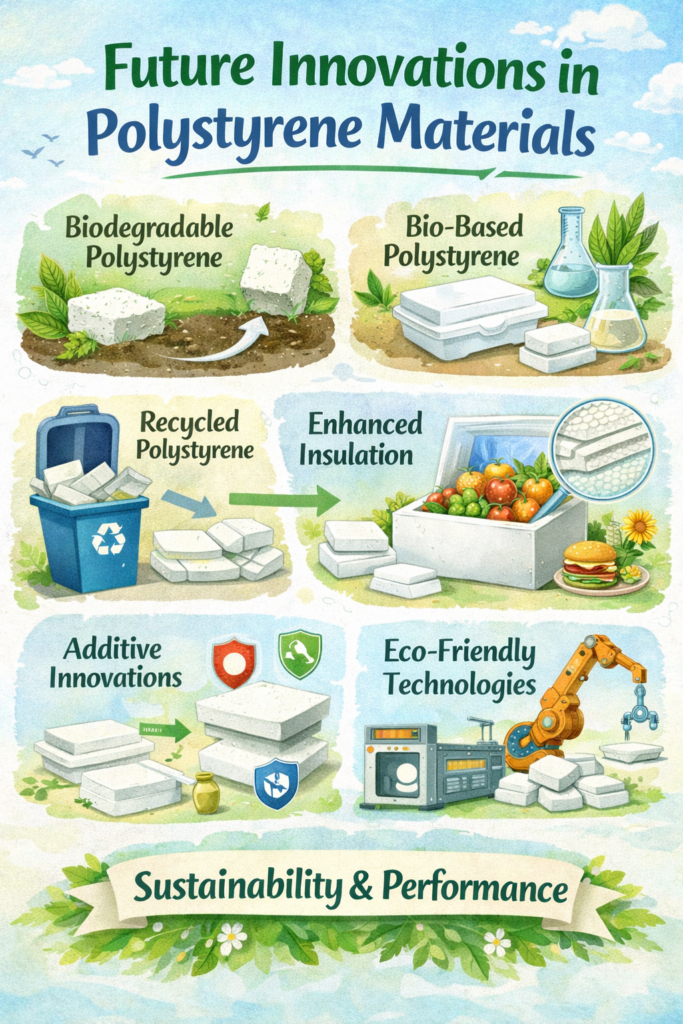
Researchers continue to improve polystyrene performance through material innovation.
Emerging Developments
-
Graphite-enhanced EPS insulation
-
Fire-resistant polystyrene formulations
-
Recycled polystyrene insulation boards
-
Bio-based polystyrene alternatives
These innovations aim to improve thermal efficiency, safety, and sustainability.
Frequently Asked Questions (FAQ)
What is the melting point of polystyrene?
The polystyrene melting point generally falls between 180°C and 240°C, although it begins softening at around 90–100°C.
At what temperature does polystyrene start to soften?
Polystyrene starts to soften at its glass transition temperature, typically between 90°C and 105°C.
Can polystyrene insulation melt in a building?
No. Building temperatures rarely exceed 70°C, which is significantly below the temperature required for polystyrene to soften or melt.
Is expanded polystyrene heat resistant?
Expanded polystyrene can tolerate temperatures up to 75°C during normal service conditions, making it suitable for insulation systems.
Does sunlight melt polystyrene foam?
Sunlight alone cannot reach temperatures high enough to melt polystyrene, though prolonged UV exposure may cause surface degradation.
Is polystyrene safe for insulation?
Yes. When properly installed and protected with fire-rated materials, polystyrene insulation systems are safe and widely used i modern construction.
Conclusion
The polystyrene melting point plays a crucial role in determining how this versatile polymer performs across industries such as construction, packaging, and manufacturing. Although polystyrene does not have a single sharp melting temperature due to its amorphous structure, it typically begins to soften around 90–100°C and fully melts between 180°C and 240°C.
For building applications, these temperature limits remain well above the conditions encountered in residential and commercial environments. This makes materials like expanded polystyrene (EPS) and extruded polystyrene (XPS) reliable choices for insulation systems, structural panels, and energy-efficient building designs.
Understanding the thermal behavior of polystyrene helps engineers, architects, and builders design safer and more efficient structures. As material science continues to advance, improved formulations and recycling technologies will further enhance the performance and sustainability of polystyrene products.
If you want to explore high-quality polystyrene boards, insulation systems, and advanced construction materials, continue learning about modern EPS solutions and how they can improve energy efficiency in your building projects.
SEO Title
Polystyrene Melting Point: Temperature and Heat Limits
Meta Description
Learn the polystyrene melting point, heat resistance, and thermal properties. Discover how EPS insulation performs in construction and manufacturing.
Suggested URL Slug
polystyrene-melting-point
Internal Linking Suggestions
-
What is Expanded Polystyrene (EPS)
-
Benefits of Polystyrene Insulation Boards
-
EPS vs XPS Insulation Comparison
-
Best Adhesives for Polystyrene Boards
-
Thermal Properties of Insulation Materials
Credible External References
-
American Chemistry Council – Polystyrene Properties
-
Plastics Europe – Polystyrene Technical Data
-
ASTM International Material Standards
-
Building Science Corporation – Insulation Materials Guide
-
Engineering Toolbox – Thermal Properties of Plastics